
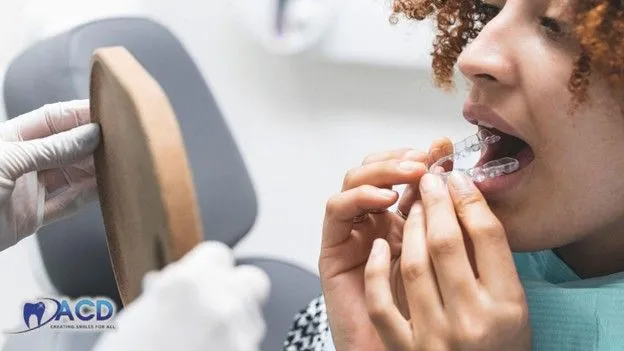
If you are searching for clear aligners in Whitehall, PA, you are likely looking for a discreet, predictable way to correct misalignment without traditional braces.
Adult orthodontics has grown substantially over the past decade. The American Association of Orthodontists® reports that nearly one in three orthodontic patients today is over the age of 18. Adults between 30 and 60 are increasingly pursuing orthodontic correction for functional and cosmetic reasons.
At Advanced & Comfort Dentistry in Whitehall, we provide modern clear aligner therapy using ClearCorrect and CandidPro™ systems, supported by digital scanning and CBCT diagnostics for precise treatment planning.
This guide explains candidacy, cost, clinical science, risks, insurance coverage, and what to expect from start to finish
What Are Clear Aligners?
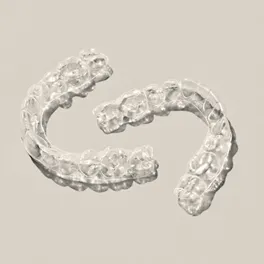
Clear aligners are custom fabricated, removable thermoplastic trays designed to apply controlled, incremental force to teeth.
Orthodontic tooth movement is not cosmetic repositioning. It is a biologic process involving:
- Periodontal ligament compression
- Cellular inflammatory signaling
- Osteoclast mediated bone resorption
- Osteoblast driven bone deposition
This process allows teeth to gradually move into improved alignment while maintaining periodontal stability when properly supervised.
Unlike fixed metal brackets, aligners are removable and nearly invisible, making them particularly appealing for working professionals and adults.
ClearCorrect and CandidPro: Modern Aligner Systems
At Advanced & Comfort Dentistry, we use:
- ClearCorrect by Straumann Group
- CandidPro professional aligner system
Both systems rely on digital treatment planning and staged tooth movement.
Treatment is not mail order or remote only. It is clinically supervised in office with diagnostic imaging and progress monitoring to ensure biological safety and predictability.
Who Is a Candidate for Clear Aligners?
Clear aligners are typically effective for:
- Mild to moderate crowding
- Non-uniform Dental Spacing
- Relapse after previous braces
- Mild overbite or underbite
- Cosmetic alignment refinement
Teenagers aged 14 to 29 often seek correction for:
- Crowded Teeth, to create space to align overlapping teeth
- Gradually closing gaps caused by genetics or missing teeth
- Preventing from overbite, underbite and crossbite
- Corrects slightly rotated teeth using targeted pressure
- Treats mild to moderate anterior open bites
Teenagers often experience faster treatment results with clear aligners due to their active skeletal growth and higher bone remodeling rates.
While adults aged 30 to 60 often seek correction for:
- Teeth shifting after braces in adolescence
- Difficulty flossing due to crowding
- Uneven smile line
- Pre restorative alignment before veneers or crowns
Adults typically require stricter compliance monitoring with the clear aligner treatment protocol to achieve optimal results.
However, dental aligners may not be ideal for:
- Severe skeletal discrepancies
- Significant jaw asymmetry
- Advanced periodontal disease
- Cases requiring complex surgical orthodontics
A comprehensive exam including digital scan and, when indicated, CBCT imaging determines candidacy.
Diagnostic Protocol at Advanced & Comfort Dentistry
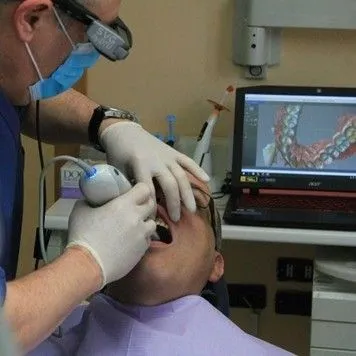
Successful orthodontic treatment begins with accurate diagnostics.Your evaluation may include:
- Digital intraoral scanning
- 3D treatment simulation
- Occlusal analysis
- Periodontal assessment
- CBCT imaging when clinically indicated
CBCT allows three dimensional visualization of:
- Root positioning
- Bone density
- Impacted teeth
- Anatomic limitations
This ensures that tooth movement remains within biologically safe boundaries and aligned with dental standards provided by the ADA.
Step by Step Clear Aligner Process
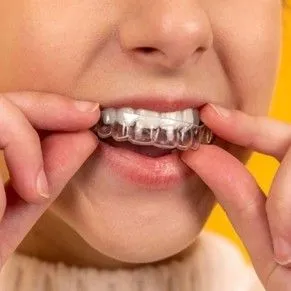
- Consultation and Records
- Digital treatment planning
- Custom aligner fabrication
- Attachment placement if required
- Aligner changes every 1 to 2 weeks
- Monitoring visits
- Refinement phase if necessary
- Retainer phase to prevent relapse
Average treatment duration ranges from 6 to 18 months depending on complexity.
Clear Aligners vs Traditional Braces
| Factor | Clear Aligners | Braces |
| Visibility | Nearly invisible | Visible metal brackets |
| Removable | Yes | No |
| Oral hygiene | Easier | More challenging |
| Food restrictions | Minimal | Significant |
| Complex movement | Limited in severe cases | Stronger mechanical control |
For adults prioritizing aesthetics and comfort, such transparent and durable clear dental aligners are often preferred.
How Much Do Clear Aligners Cost in Whitehall, PA?
In Pennsylvania, clear aligner treatment typically ranges from $3,000 to $7,000 depending on:
- Case complexity
- Duration
- Number of aligners required
- Refinement stages
- Insurance contribution
Many dental insurance plans with orthodontic benefits cover a portion of adult aligner therapy.
At Advanced & Comfort Dentistry:
- We accept major Pennsylvania insurance carriers
- We provide insurance benefit verification
- Financing options may be available
- Free orthodontic consultations are currently offered
Cost transparency is critical, especially in price sensitive communities.
Are Clear Aligners Covered by Insurance?
Coverage for clear aligner therapy depends on the structure of your specific dental insurance plan. Most orthodontic benefits are subject to:
- Age limitations within the policy
- Lifetime orthodontic maximum benefit
- Waiting periods before eligibility
- Plan tier and employer sponsored coverage level
Many insurance carriers in Pennsylvania provide partial coverage for adult orthodontic treatment, although benefits are often capped at a fixed lifetime maximum rather than a percentage of total treatment cost.
It is important to understand that orthodontic benefits differ from standard restorative benefits. Even when major services such as crowns or implants are covered at 50 percent, orthodontic coverage may follow a separate reimbursement model.
Our administrative team conducts a detailed benefits verification prior to initiating treatment. This includes confirmation of remaining orthodontic maximum, frequency limitations, coordination of benefits if dual coverage exists, and estimated out of pocket responsibility.
Does Clear Aligner Treatment Hurt?

Clear aligner therapy is associated with controlled biologic pressure rather than sharp or acute pain. When a new aligner tray is inserted, patients commonly experience a sensation of tightness or pressure for 24 to 72 hours. This response reflects periodontal ligament compression and the initiation of localized inflammatory signaling that drives bone remodeling.
Discomfort typically peaks within the first 48 hours and gradually subsides as the tissues adapt to the applied force. Over the counter analgesics may be used if needed, although most adults describe the sensation as tolerable and significantly milder than traditional orthodontic bracket adjustments.
Pain that is severe, persistent, or accompanied by swelling is not typical and warrants clinical evaluation. Excessive discomfort may indicate improper tracking, occlusal interference, or underlying periodontal sensitivity.
Patients with a history of bruxism or temporomandibular joint symptoms should inform the provider during consultation, as occlusal adjustments may be necessary during treatment.
Risks and Clinical Considerations
Like any orthodontic treatment, clear aligners carry potential risks:
- Root resorption
- Gingival irritation
- Temporary speech alteration
- Tracking issues requiring refinement
- Non compliance leading to delayed results
Adults with periodontal disease require stabilization before orthodontic therapy.
Orthodontic movement in the presence of active periodontal disease increases risk of attachment loss.
Careful screening reduces complications.
Clear Aligners After 40 or 50

Orthodontic treatment in adults over 40 or 50 is not only feasible, but increasingly common. Bone remodeling continues throughout adulthood, allowing predictable tooth movement when periodontal health is stable. However, adult orthodontics differs from adolescent treatment in several clinically relevant ways.
Adults are more likely to present with:
- Occlusal wear patterns
- Periodontal attachment loss
- Reduced bone density in localized areas
- Existing restorations such as crowns or bridges
A comprehensive periodontal evaluation is essential before initiating aligner therapy. Active gum disease must be stabilized to prevent further attachment loss during orthodontic movement.
In many cases, clear aligners are strategically used as a pre-restorative tool. For example, minor alignment correction can improve the long term prognosis of veneers, crowns, or implant supported restorations by optimizing occlusion and load distribution.
Age is not a contraindication. Uncontrolled periodontal disease is.
Clear Dental Aligners Treatment Timeline Expectations
Treatment duration depends on biological response, complexity of malocclusion, and patient compliance. While digital simulations provide projected timelines, they represent planned movement under ideal conditions.
Mild cosmetic alignment cases may complete in 6 to 9 months. Moderate crowding or spacing often requires 9 to 15 months. More complex cases involving bite correction may extend to 18 months or longer.
Several variables influence duration:
- Presence of restorations or occlusal interferences
- Daily wear compliance of 20 to 22 hours
- Bone density and metabolic response
- Need for refinement aligners
- Missed appointments
Adults who inconsistently wear aligners significantly prolong treatment and may require additional fabrication stages.
Periodic clinical monitoring ensures teeth are tracking according to plan. If tracking deviations occur, refinements are implemented to maintain precision and prevent relapse.
Clear aligner therapy is not instantaneous cosmetic repositioning. It is a biologically regulated process that requires disciplined adherence.
What Happens After Treatment?
Completion of active aligner therapy marks the beginning of the retention phase, not the end of orthodontic care.
Teeth possess memory within periodontal and supracrestal fibers. Without retention, relapse can occur due to elastic recoil of these supporting structures. Studies consistently demonstrate that retention is mandatory to preserve treatment outcomes.
Most patients transition to custom fabricated clear retainers worn nightly. In certain cases, a bonded lingual retainer may be recommended for additional stability, particularly in lower anterior alignment.
Retention protocols are individualized based on:
- Age
- Occlusal forces
- Periodontal stability
- Initial malocclusion severity
- Parafunctional habits such as bruxism
Failure to wear retainers as prescribed may result in gradual relapse, potentially requiring corrective retreatment.
Retention is not optional maintenance. It is a critical phase of orthodontic stability.
Why Choose Advanced & Comfort Dentistry for clear aligners in Whitehall?
- 17 years of continuous service
- Multi provider clinical team
- Digital scanning technology
- CBCT diagnostic capability
- Insurance eligibility check available
- Major Insurance acceptance
- Free orthodontic consultation
We combine evidence based orthodontic principles with family oriented care.
Schedule Your Free Clear Aligner Consultation
If you live in Whitehall Township, Allentown, Bethlehem, or surrounding Lehigh County areas, schedule your complimentary orthodontic evaluation.
Our team will:
- Assess candidacy
- Review insurance benefits
- Provide cost breakdown
- Explain timeline
- Answer clinical questions
Clinical Disclaimer
This article is for educational purposes only and does not replace an in person dental examination. Individual treatment outcomes vary based on clinical conditions, compliance, and biologic response. Severe infection, trauma, or acute swelling may require emergency medical evaluation. Advanced & Comfort Dentistry always ensures effective compliance with our dental practice.