
Understanding Endodontics in Whitehall, Pennsylvania
On this page
Endodontics treats problems affecting the inner tooth, root canals, and surrounding tissues. Tooth pain can affect daily activities, especially when the pulp or root is involved. Endodontics in Whitehall, Pennsylvania helps patients understand their treatment options and feel more prepared for care.
At Advanced & Comfort Dentistry, patients can discuss their symptoms, treatment options, and the goal of preserving healthy natural teeth whenever possible. Understanding the treatment process can help patients make informed decisions about their dental care.
Endodontics treats problems affecting the inner tooth, root canals, and surrounding tissues. When deep tooth pain involves the pulp or root, understanding Endodontics in Whitehall, Pennsylvania can help patients feel more prepared for treatment.
What Is Endodontics?
Endodontics is a dental specialty focused on the tooth pulp and tissues around the roots. It helps diagnose and treat problems such as inflammation, infection, and tooth pain.
One of the most common Endodontic Treatments is root canal treatment, which removes infected pulp, cleans the root canals, and seals the tooth. Treatment may also be needed after a crack, deep cavity, or dental injury damages the pulp.
Patients researching Endodontics in Whitehall, Pennsylvania may need care for persistent sensitivity, biting pain, swelling, or gum tenderness. Early evaluation can help determine if the natural tooth can be saved and restored.
Who Is a Good Candidate for Endodontics?
Endodontics may be appropriate for patients with pulp inflammation, infection, or internal tooth damage when the natural tooth can still be restored. An evaluation is important even without severe pain, as an Endodontic Procedure may be needed to treat tooth pulp problems.
1. Patients With Tooth Pain or Sensitivity
- Lingering sensitivity to hot or cold may indicate pulp problems.
- Pain while chewing or biting can be a sign that the tooth needs evaluation.
2. Patients With Damaged Teeth
- Cracked, chipped, or injured teeth may have damage inside the tooth.
- Deep tooth decay can affect the pulp and may require endodontic treatment.
3. Patients With Infection or Swelling
- Swollen or tender gums may indicate infection around the affected tooth.
- A pimple or drainage near the tooth can also require professional evaluation.
4. Patients With Tooth Discoloration
- Teeth Whitening may be considered after evaluating underlying dental concerns.
- An examination can help determine whether the pulp is healthy.
5. Patients With Restorable Teeth
- The amount of remaining tooth structure can affect treatment suitability.
- Endodontics in Pennsylvania may be considered when the natural tooth can be treated and restored.
- If the tooth cannot be saved, Tooth Extractions may be discussed after a complete evaluation.
A professional evaluation helps determine whether endodontic treatment is appropriate and whether saving the natural tooth is practical.
Which Treatments Does Endodontics Include?
Endodontics may include different treatments depending on the condition of the tooth and the cause of the problem.
1. Root Canal Treatment
- Treats Infected Pulp: Removes damaged or infected pulp from inside the tooth.
- Preserves the Natural Tooth: Cleans, disinfects, and seals the root canals to help save the tooth.
2. Endodontic Retreatment
- Treats Previous Treatment: May be recommended when a previously treated tooth does not heal properly.
- Cleans the Canals Again: Removes old filling material, cleans the canals, and reseals the tooth.
3. Endodontic Surgery
- Treats Persistent Infection: May address infection around the root that cannot be treated through the crown.
- Includes Apicoectomy: Removes the affected root tip and surrounding tissue when necessary.
- In more complex cases, Oral Surgery may be considered when additional surgical care is required.
The appropriate treatment depends on the tooth’s condition, surrounding tissues, and overall oral health. In some cases, tooth replacement options may be discussed when the natural tooth cannot be saved.
What Are the Benefits of Endodontics?
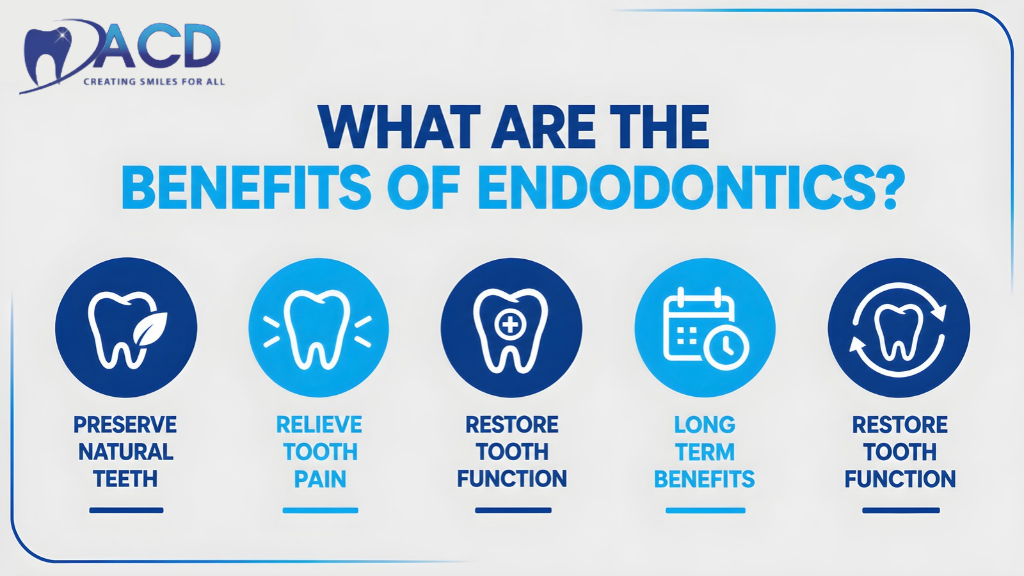
1. Preserve Natural Teeth
- Helps save natural teeth.
- Maintains normal chewing.
- Avoids immediate extraction.
2. Relieve Tooth Pain
- Treats infected pulp.
- Reduces tooth discomfort.
- Improves daily comfort.
3. Treat Dental Infections
- Removes infection.
- Protects surrounding tissues.
- Supports oral health.
4. Restore Tooth Function
- Supports chewing and biting.
- Protects remaining tooth structure.
- Maintains normal tooth function.
5. Support Long-Term Oral Health
- Helps preserve tooth stability.
- May reduce replacement needs.
- Supports ongoing dental health.
Information about Regenerative Endodontics also describes approaches within the broader field of endodontic care.
Endodontics Key Benefits for Patients
| Benefit | Why It Matters |
| Preserves the natural tooth | Helps maintain familiar chewing and biting |
| Treats internal infection | Addresses the problem inside the tooth |
| Supports comfort | Local anesthesia helps keep treatment comfortable |
| Maintains tooth position | Helps reduce unwanted movement of nearby teeth |
| Restores function | Allows the tooth to return to normal use after restoration |
Patients who need to protect their treated tooth may also receive guidance related to Preventive Dentistry and Dental Bonding when suitable.
What Happens During Endodontics Treatment?
Knowing what to expect can make Endodontics easier to understand. Treatment usually includes diagnosis, cleaning, sealing, restoration, and aftercare.
1. Examination and Diagnosis
- The dentist reviews your symptoms and examines the affected tooth and surrounding tissues.
- X-rays or other diagnostic tests may be used to identify the source of the problem.
2. Numbing and Isolation
- Local anesthesia is used to keep the treatment area comfortable during the procedure.
- The tooth is isolated to keep it clean and protected during treatment.
3. Cleaning the Root Canals
- The damaged or infected pulp is removed from inside the tooth.
- The root canals are carefully cleaned, shaped, and disinfected to remove bacteria.
4. Filling and Sealing
- After cleaning, the root canals are filled with a suitable material and sealed.
- A temporary restoration may be placed until the final restoration is completed.
5. Final Restoration and Aftercare
- A filling or crown may be recommended to protect the treated tooth and restore its function.
- Following dental instructions and attending follow-up visits can support proper healing.
- When appearance is also a concern after treatment, a Cosmetic Dentist may discuss suitable options.
Patients researching Endodontics in Pennsylvania can discuss the treatment process, restoration needs, and recovery expectations with their dental provider.
Why Choose Advanced & Comfort Dentistry for Endodontics?
Choosing a provider for Endodontics means choosing a team that can explain the problem clearly and help you understand your treatment options. Patients deserve straightforward communication about the diagnosis, expected procedures, possible alternatives, and follow-up care.
Advanced & Comfort Dentistry is focused on helping patients make informed dental decisions based on their individual needs. A consultation can help clarify whether the goal is to save the tooth, what treatment may be appropriate, and how the tooth should be protected afterward.
Patients considering Endodontics in Whitehall, Pennsylvania should not ignore persistent tooth pain, swelling, or sensitivity. A timely evaluation can help identify the cause and prevent a treatable problem from becoming more complicated.
Conclusion
Endodontics can provide an important tooth-saving option when the pulp becomes inflamed, infected, or damaged. Root canal treatment, retreatment, and selected surgical procedures can address different internal tooth problems while supporting natural tooth preservation.
If you are experiencing ongoing tooth pain, sensitivity, swelling, or discomfort when chewing, professional evaluation is more reliable than trying to diagnose the problem yourself. With the right diagnosis and treatment plan, patients can move toward better comfort and restored dental function.
Advanced & Comfort Dentistry is here to provide thoughtful, patient-centered care for individuals and families in the Whitehall area. Contact Us Today to schedule your dental visit, discuss tooth pain or sensitivity, and learn whether Endodontics may be right for your needs.
Frequently Asked Questions
1. Is Endodontics the same as a root canal?
No. Endodontics is the specialty that deals with the inside of the tooth and tissues around the roots. A root canal is one of the most common procedures within this specialty.
2. Does Endodontics treatment hurt?
Local anesthesia helps numb the treatment area. Some tenderness may occur after treatment, but modern techniques are designed to keep patients comfortable during the procedure.
3. How do I know if I need Endodontics?
Lingering sensitivity, pain when biting, swelling, gum tenderness, or a damaged tooth may indicate a pulp problem. A dental examination is necessary to determine the actual cause.
4. Can Endodontics save my natural tooth?
In many cases, yes. The dentist evaluates the remaining tooth structure and surrounding tissues to determine whether the natural tooth can be successfully treated and restored.
5. How soon should I seek treatment for tooth pain?
Arrange an evaluation promptly when pain persists, especially when swelling, drainage, fever, or strong sensitivity develops. Early assessment may help prevent the condition from becoming more difficult to manage.

Advanced & Comfort Dentistry team
Written by the Advanced & Comfort Dentistry team. We provide personalized, comfort-first dental care for the whole family in Whitehall, PA — from general and cosmetic dentistry to implants and emergency care.